
"coffee market growth"
6000 article(s) found

There are more than 500 Tims coffee stores in China, with revenue growth of more than 70% in half a year!
Professional coffee knowledge exchange more coffee bean information please follow the coffee workshop (Wechat official account cafe_style) more boutique coffee beans please add private Wechat Qianjie coffee, WeChat: qjcoffeex recently, Tims coffee in China officially opened in Dongguan, Guangdong. This is
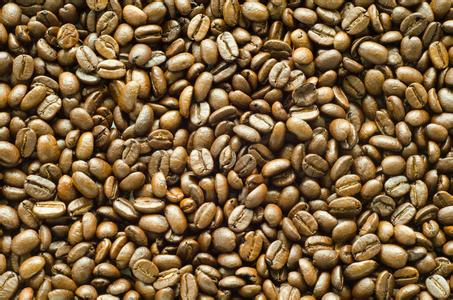
China's coffee consumption has grown at an annual rate of 20%-much higher than the global growth rate of 2%.
In 2008, Huang Wenguang chose to enter Nankeng Reclamation Coffee Manor in Zhangzhou, Fujian Province, and began to grow local coffee. In his view, coffee is squeezing into the Chinese market, which is dominated by tea culture, and if coffee is to be truly successful in China, there must be a coffee bean that is more suitable for the Chinese population, and a local coffee brand with more Chinese characteristics is needed, on the one hand, the market demand for
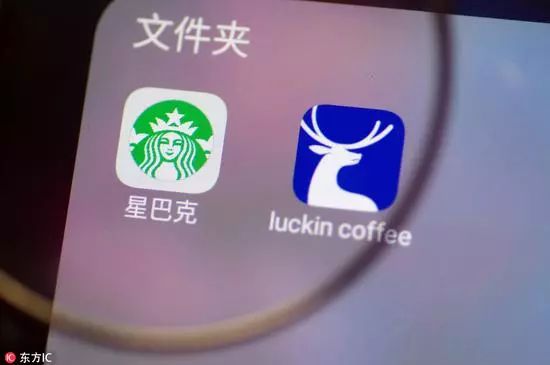
Luckin Coffee sued Starbucks that it was difficult to prove, and Starbucks calmly disclosed the latest growth plan.
Professional coffee knowledge exchange for more information on coffee beans Please follow Coffee Workshop (Wechat official account cafe_style) on the third day after accusing Starbucks of monopolization, Luckin Coffee said the case had entered the judicial process and would no longer comment on the matter. The calm Starbucks came the news that it was going to make takeout, pointing directly at the fate of takeout coffee brands such as Ruixing. Today, on a legal level,

Analysis | Development of coffee shop franchise industry in China in 2017
Professional barista communication please follow the coffee workshop (Wechat official account cafe_style) Coffee one of the three major drinks in the world, which is rich in protein, crude fiber, crude fat, caffeine and so on. Because of its unique mellow taste and refreshing and exciting effect, it has gradually become an indispensable daily drink for modern people. Baristas are the second largest traded commodity in the world after oil.

China's coffee consumption will maintain an annual growth rate of about 20%
For coffee to be truly successful in China, it will have to convince less-visited regions that coffee can complement or even replace tea, especially for some unique coffee varieties. The Wall Street Journal website once reported that as the economic development slows, China's commodity demand may be slowing down, but in a country with a tradition of drinking tea, coffee is even more expensive.

Targeting the great growth of China's coffee market in 2011
Australia flooded in early January, and wine has risen this year because the disaster area is an important grape origin. Even without natural disasters, chateau wines with collectible value have been rising for more than a decade. The Japanese cartoon "Shenzhi" details the various flavors of wine, how to preserve and match dishes, and even the situation of the drinker should be taken into account. To put so much effort into it is to complete one.
The crisis of eliminated instant coffee Nestle coffee
McDonald's sells coffee, KFC sells coffee, Haagen-Dazs sells coffee, even clothing brand attachment has opened a cafe of the same brand, and Starbucks is still desperately expanding. As a result, Nestl é, the largest brand in the Chinese instant coffee market, destroyed hundreds of tons of instant coffee near its expiration date at a coffee factory in Dongguan in January and February this year. The appearance of Nestl é China Public Relations Department

Is there really a trillion-dollar coffee market in China? Three great opportunities for the coffee market in the future!
Professional coffee knowledge exchange More coffee bean information Please pay attention to coffee workshop (Weixin Official Accounts cafe_style) interpretation: At present, the coffee market scale in China is about 110 billion yuan, far away from the total market volume of 1 trillion yuan. In response to the old saying, there is a long way to go for the take-off of China's coffee market. China's coffee market is big enough and profitable enough
After Sears, Starbucks tea shop also closed! Close all its Teavana tea stores
Following Kaiping (Wechat official account vdailycom) found that Beautiful Cafe opened a small shop of its own, with 2800 stores all operating itself to 5000 in 2021. This is another growth story about the Chinese market. Starbucks spent 1.3 billion US dollars to take over the operation rights of all Starbucks stores in mainland China, which means that all Starbucks stores in mainland China will be owned by Starbucks.
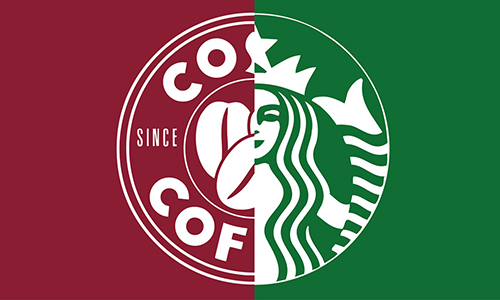
Starbucks COSTA routine: grab the hearts of consumers and immediately get rid of Chinese companies to make crazy profits.
Professional baristas Please follow the Coffee Workshop (official Wechat account cafe_style) COSTA has long been as stubborn, coquettish and traditional as its British ancestry. But in the face of the gratifying growth of the Chinese coffee market, the stubborn English gentleman finally got restless. After Starbucks spent nearly 8.8 billion yuan on 1300 stores in East China in July this year, COST

The Russian coffee market is growing rapidly in 2018. How much coffee do Russians drink?
Professional coffee knowledge exchange more coffee bean information Please pay attention to coffee workshop (Wechat official account cafe_style) the Russian coffee market is one of the hot drink markets, although there is great instability in the consumption sector, the Russian coffee market is showing a steady upward trend and consumption is growing. Another factor in the growth of the entire hot drink category, including coffee, in 2018 is in Russia.

Jinuo intelligent coffee mill is popular in first-and second-tier cities in China.
More and more Chinese are beginning to sip Western drinks, and coffee is undoubtedly the first to bear the brunt. Relevant industry data show that the space of China's coffee market will continue to expand and will enter a period of rapid growth in the next 10 years. According to the London International Coffee Organization, compared with the global average growth rate of 2%, China's coffee consumption is growing at an astonishing rate of 15% a year. According to statistics, China's current
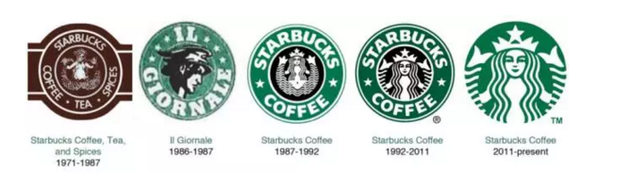
Why does Starbucks prefer China? Open another 1.33 stores a day for the next five years.
Following Kaiping (Wechat official account vdailycom) found that Beautiful Cafe opened a small shop of its own, with 2800 stores all operating itself to 5000 in 2021. This is another growth story about the Chinese market. Starbucks spent 1.3 billion US dollars to take over the operation rights of all Starbucks stores in mainland China, which means that all Starbucks stores in mainland China will be owned by Starbucks.

Tesco's coffee business exceeded expectations in the first quarter of the year.
Tesco PLC, the largest retailer in the UK, updated its first-quarter results, showing comparable sales growth of 0.9 per cent in the first quarter, of which sales in the UK market rose 0.3 per cent, exceeding analysts' expectations of 0.2 per cent, and achieved two consecutive quarters of growth. Comparable sales in Tesco's international market grew by 3.0% in the first quarter ended May 26, including 2.8% in Europe and 3.3% in Asia. If
The share price has risen sevenfold in three years. Starbucks cooks Golden Coffee.
Despite a two-week correction in US stocks, the share price of Starbucks, the world's largest coffee and beverage retailer, bucked the trend, reaching an intraday high of $61.98 on Friday and closing at $61.67. once again set an all-time high for intraday and closing prices. Starbucks shares have risen 27.5% year-to-date, compared with the company in 2008.

Low-cost freshly ground coffee is all over the street, is there still a market for instant coffee?
With the continuous growth of the domestic coffee market, instant coffee, fine freshly ground coffee and ready-to-drink coffee have developed by leaps and bounds. Compared with the other two categories, drinking coffee is obviously more "low-key", accounting for only 10% of the total market share of coffee consumption. However, on the basis of the increasing consumer demand for coffee, drinking coffee

Store, payment or scenario? Coffee brand competition map
■ Wen/Cui Dapeng Qing Wen Bo Zhang Chunyan No matter how strong or weak a brand is, 500 stores are roughly enough to ensure that the per capita radius does not exceed half a kilometer; when more than 500 stores, the growth share is very limited. Cafes bloom everywhere in large and medium-sized cities in China, and major brands are racing around. A means of expanding market share, usually by expanding stores or raising

Large coffee chains have entered China one after another-domestic coffee shops are also on the rise
1: China's sustained high economic growth, the increasing improvement of people's living standards, the increasing diversity and improvement of the quality of life, and the economic possibility of coffee consumption have directly catalyzed the vigorous development of the coffee industry. 2: the influence of globalization has led to the internationalization of consumption habits, and the number of people drinking specialty coffee is expanding. 3: large coffee chains have entered China.

Starbucks CEO is optimistic about China: the expansion of China's Coffee Market will continue for decades
Professional baristas follow coffee workshop (Wechat official account cafe_style) Starbucks believes that China's growing middle class and urbanization will increase the demand for coffee in this popular tea culture. China is Starbucks' biggest growth opportunity, and the expansion of the Chinese market is likely to continue for decades. This is Kevin John, CEO of Starbucks.
Last year's poor performance, why did Nestl é pour out the coffee?
In the 1980s, Maxwell and Nestle, two major instant coffee brands, were almost the forerunners of Chinese mainland coffee enlightenment education. But the coffee market is no longer just owned by Nestl é and Maxwell. Under pressure from many coffee products to carve up the market, Nestl é destroyed nearly 400 tons of unexpired instant coffee in February. The production capacity is ahead of the consumption capacity, and Nestle dissolves coffee.